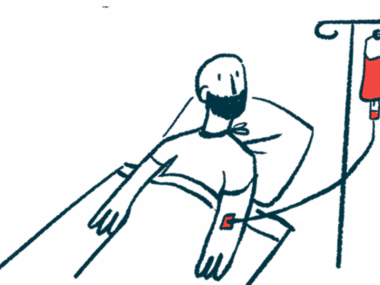
Doctors warn eye bleeding can be first sign of hemophilia A
Man's diagnosis after minor injury highlights rare initial symptom
Written by |

- Eye bleeding after minor injury can be a rare first sign of undiagnosed hemophilia A, according to U.S. researchers.
- This symptom led to a diagnosis of the bleeding disorder in a 32-year-old man.
- Timely surgery and factor VIII replacement are crucial to preserve vision in such cases, the researchers noted.
A 32-year-old man was diagnosed with hemophilia A after a minor injury caused disproportionate right eye bleeding, with a buildup of pressure inside the eye and vision loss, a new U.S. case study reports.
According to the researchers, this case demonstrates that an eye bleed can be a rare first sign of hemophilia A in patients.
The team noted that the man was found to have orbital compartment syndrome, characterized by increased pressure within the eye, which compromises the optic nerve and impairs vision.
“This case highlights a rare and vision-threatening initial presentation of hemophilia A,” the researchers wrote. “It also underscores the importance of recognizing orbital compartment syndrome and performing timely [surgery] to preserve vision.”
The case was described in a study titled “Undiagnosed hemophilia presenting as orbital hemorrhage in a 32-year-old male,” published in the American Journal of Ophthalmology Case Reports.

Hemophilia is characterized by impaired blood clotting, leading to excessive bleeding and other symptoms. The disease is typically caused by genetic mutations that lead to the absence or dysfunction of proteins involved in blood clotting. In hemophilia A, the most common type, these deficiencies occur in the protein clotting factor VIII (FVIII).
Case is first of eye bleeding as an initial symptom in adults
In this study, a trio of scientists from Wills Eye Hospital in Philadelphia detailed the case of a man from Togo who sought treatment for eye bleeding and vision loss 10 hours after he was struck in the face by a cardboard box. At the emergency department, he reported pain around the right eye, swelling, and vision loss.
According to the team, the disproportionate bleeding following a minor injury was an initial indication of hemophilia A.
Examination of the man’s right eye revealed high pressure inside the eye (intraocular pressure), reduced response to light, and visual acuity of hand motion, meaning he was able to see and perceive hand movements but not count fingers or read. The left eye had normal visual acuity and intraocular pressure.
A CT scan revealed he had bleeding behind the eye, swelling, and eye bulging from its natural position. There also was evidence of stretching of the optic nerve, which is the nerve that transmits signals between the eye and the brain. The researchers noted that this was consistent with orbital compartment syndrome, in which the rapidly increased pressure inside the eye socket compromises the blood supply to the optic nerve.
The man underwent a surgical procedure to alleviate intraocular pressure, but it remained elevated. Laboratory studies revealed a prolonged activated partial thromboplastin time, indicating that the blood was clotting more slowly than normal. Further clotting factor tests, which measure activity and levels of blood clotting factors, confirmed a diagnosis of hemophilia A.
Man had no previous history of easy bruising
Upon questioning, the man denied any previous history of easy bruising, or nose or gingival (related to the gums) bleeding. That indicated that eye bleeding was the initial presentation of hemophilia A, the researchers noted.
Orbital hemorrhage [bleeding within the eye socket] disproportionate to trauma should prompt consideration of [a blood clotting disease] such as hemophilia A.
Treatment with factor VIII replacement therapy was started, which stabilized bleeding. While surgery was considered to further relieve pressure on the eye and optic nerve, it was deferred because the man’s vision worsened to no light perception.
“Although [hemophilia A] was ultimately identified and treated, the duration of optic nerve compression resulted in irreversible vision loss,” the researchers wrote.
The patient was discharged six days after seeking treatment. At a follow-up four weeks later, the wound had healed appropriately, and intraocular pressure was normal. However, the patient regularly follows up with a hematologist.
According to the researchers, this is the first case of undiagnosed hemophilia A presenting as eye bleeding in patients older than 18, expanding “the demographic scope of such presentations.”
The team concluded that “orbital hemorrhage [bleeding within the eye socket] disproportionate to trauma should prompt consideration of [a blood clotting disease] such as hemophilia A.”