
Persistent bleeding after dental work may signal mild hemophilia
Review study finds cases that point to potential link
Written by |

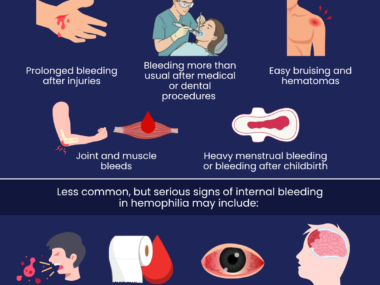
Bleeding that persists or restarts after dental procedures may be an important warning sign of previously undiagnosed mild hemophilia, a systematic review of published case reports suggests.
Across seven reports involving eight people, delayed and persistent bleeding — in most cases after a tooth extraction — prompted further testing that ultimately uncovered the previously undiagnosed inherited bleeding disorder.
All eight were found to have mild disease, and seven were adults, highlighting how “mild hemophilia is often overlooked and undiagnosed” because its symptoms may be subtle or neglected, the researchers wrote.
The findings highlight “the importance of dental professionals” in recognizing early signs of an undiagnosed bleeding disorder, the team added.
The study, “Oral Clues to Undiagnosed Congenital Hemophilia: A Systematic Review of Case Reports,” was published in Special Care in Dentistry.

Symptoms usually prompt early diagnosis
Hemophilia is caused by a deficiency in certain proteins, called clotting factors, that the body needs to form stable blood clots. Hemophilia A is caused by a deficiency in factor VIII, while hemophilia B results from a lack of factor IX.
Severe hemophilia is generally diagnosed early because bleeding symptoms are more pronounced. Milder disease can be much harder to spot because spontaneous bleeding is less common, and unusual bleeding may not emerge until an injury, surgery, or other invasive procedure.
To investigate oral signs that may help uncover previously undiagnosed hemophilia, a pair of researchers in India searched five medical databases through August 2025 for published case reports and case series involving people with hemophilia A or B who underwent dental procedures.
Of 282 records initially identified, seven reports — six individual case reports and one case series — met the criteria for inclusion. Together, they described eight people whose previously undiagnosed hemophilia was detected following abnormal oral bleeding.
Their mean age at diagnosis was 23.5. Seven were adults, and one was a 7-year-old child. Six were diagnosed with mild hemophilia A and two with mild hemophilia B. A family history of hemophilia was listed in three of the seven reports.
Tooth extraction was the most common event that brought the bleeding problem to light, although abnormal bleeding was also reported after other dental work, including periodontal surgery. A recurring pattern was bleeding that persisted or started again after the procedure, typically from the second day onward.
This pattern is consistent with the way hemophilia affects blood clotting. Platelets can gather at the injured site and form an initial plug, but without enough factor VIII or IX, the body cannot form a stable clot to reinforce and stabilize that plug. As a result, bleeding may appear to stop, only to resume later.
“Based on the findings of this review, prolonged bleeding from the second postoperative day onwards may represent an important clinical clue that should prompt consideration of previously undiagnosed hemophilia and appropriate hematological evaluation,” the researchers wrote.




Leave a comment
Fill in the required fields to post. Your email address will not be published.